- SparkNotes
- Posts
- How Doral Scales Origination While Staying Focused on Landowners
How Doral Scales Origination While Staying Focused on Landowners

Jacob Biderman
April 07, 2026
Key Takeaways
Increased engagement with local communities and less time spent behind spreadsheets | Faster and smarter workflows that update in real time, not with hours of manual work | High-accuracy AI information backed by direct links to source material |
At Doral Renewables, growth is a deeply personal endeavor. Long before a lease is signed or a project is announced, the team lays the groundwork with proactive outreach to landowners and officials. For every new state Doral enters, the team begins by identifying dozens of potential areas of interest (AOIs). Jon Gault, Senior Director of Development, described a typical funnel as starting with 10 to 15 candidates at the state level. They then narrow these down by asking two vital questions: Can the project connect to the grid, and can it be permitted?

A Doral Renewables site
Before Spark, that first-pass diligence often looked like what Jon called a “whole lot of Googling”: county sites, scattered ordinances, past project traces, and informal backchannels. Their team has an “assigned territory” model—Cody in Indiana, Brandon in Oklahoma/Kansas, Jon in Minnesota/Dakotas, Rosie in Nebraska/Iowa, Kayla in the West—so when strategy shifts and new AOIs open up, they don’t have one person doing research. Instead, several team members work tirelessly in parallel to digest the paperwork and understand every local zoning nuance. This system worked, but Doral wanted to find a way to keep their developers active in the field where they belong, rather than stuck behind spreadsheets.
That challenge was no easy task. Doral owns a portfolio spanning 17 states, with nearly 450 MW in operation and three times that amount underway. As a leading renewables developer backed by major financial sponsors, their workflow covers billions in assets under management. Every project, from origination to deployment, is a Herculean job of managing local regulations, paperwork, and deployment.
Before we go into a county, we look at Spark. We’ll look at Spark first, and then ordinance.”
Doral viewed Spark AI as an opportunity to become more efficient without lowering their standards. By using the platform to quickly identify local ordinances and extract key details, the team could bypass hours of document hunting. Over time, Spark became embedded as a standard checkpoint in Doral’s evaluation hierarchy. Jon describes the sequence plainly: “1) transmission, 2) buildability, 3) Spark, [and] 4) permitting”, where they’ll bring in local law firms to go deeper. And the adoption isn’t abstract. “Before we go into a county, we look at Spark,” Jon says. “We’ll look at Spark first, and then ordinance.”
A key reason that Doral adopted Spark was velocity: “More information is better information. [And] the quicker, the better.” Shifting to Spark allows Doral to enhance their work through cutting-edge technology. It helps them do what they already did well, but with more focus. Most importantly, it gives them the confidence to know that when they sit down at a landowner’s kitchen table, they are backed by the most accurate information available.
That velocity is clear on the ground. Cody Walker, one of Doral’s standout users, runs queries almost daily and searches multiple counties per session, especially when the team shifts into a new AOI. As Tim Walsh, VP of Development, puts it, “When we start looking in different areas [and the team] moves to a new one, that’s the most intense usage of Spark.” Their process is inherently dynamic: AOIs succeed or fail, and Doral is “constantly replacing” them with new ones. In that environment, the team doesn’t need a static report; they need a tool that can keep up with the churn without dragging them back into a day-long manual workflow.
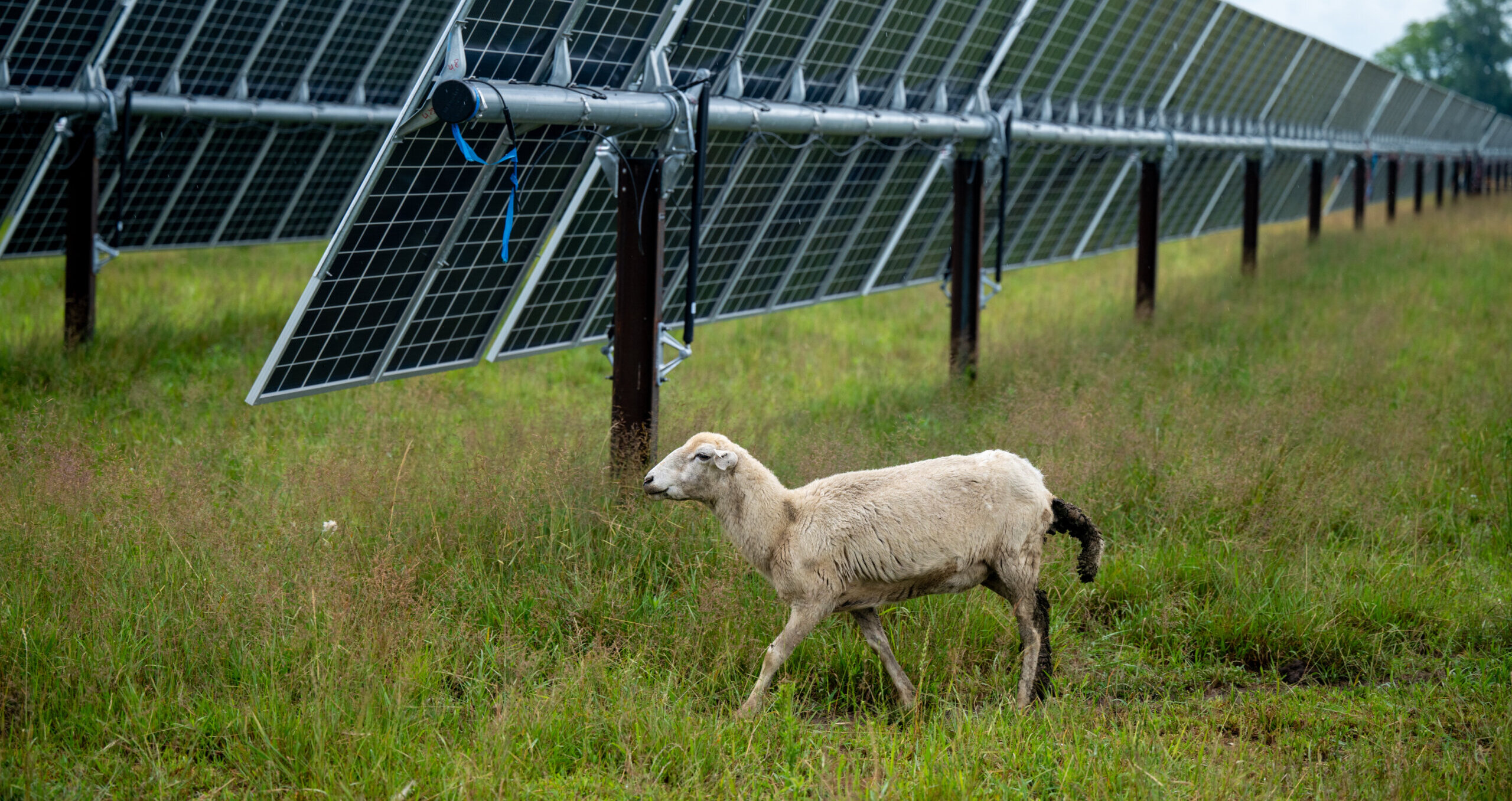
Farmer engagement is a major consideration for Doral
Doral’s commitment to early screening is also a matter of financial responsibility. Missing a permitting issue early on can result in hundreds of thousands of dollars in wasted external costs and months of lost effort. In the later stages of a project, those risks can climb into the millions. Kayla Koenig, one of the most active origination users, shared a county they had been prospecting “for about a year,” where “it’s been a rough challenge,” and Spark flagged it as “BAD.” Koenig acknowledges that “if we knew that before [we started], we would have avoided it.” That’s not incremental efficiency. That’s saving a year of expended effort.
This discipline extends well beyond the initial outreach. Doral’s development team uses the tool for ongoing monitoring of community discussions and ordinance changes through Spark AI’s Alerts feature. This ensures that risk management is a continuous conversation. By staying ahead of local changes, Doral can remain a transparent and proactive partner to the community throughout the entire life of a project.
Doral is focused on using Spark to protect the part of development that can’t be automated: the human relationship. They want to understand how a county thinks, what the local narratives are, and what’s already happened in that jurisdiction. And they know there’s a “final 10%” you only get by being physically present. “It’s hard to tell how county officials think without literally physically speaking to them,” Jon explains. Spark’s value is getting them close quickly, so that their limited in-person time is spent wisely. Today, Doral consistently ranks among Spark’s top users, and their usage continues to grow both within their existing portfolio and for new projects.
Ultimately, success in land development is built on relationships. Landowners often have many choices when it comes to who they work with, and Doral knows that trust is their greatest differentiator. That trust is built through responsiveness, consistent engagement, and being physically present in the community. With less time spent behind a desk and more time in conversation with the people who matter most, Doral can be exactly where it matters most: in the field and at the kitchen table.